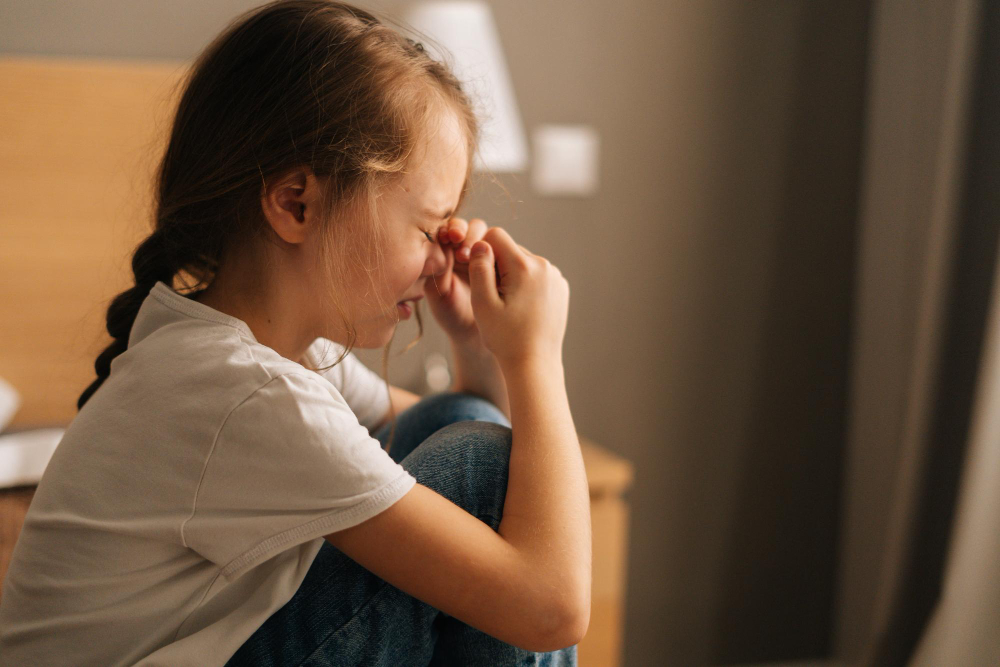
Anxiety in children is a common mental health concern. It can affect a child’s daily life, school, and relationships. Many children feel worried or nervous sometimes. However, when these feelings last a long time or get in the way of normal activities, it may be anxiety. According to the CDC, about 7% of children aged 3–17 years have diagnosed anxiety. Early recognition and support can help children manage their feelings and thrive. In this blog, we will explore childhood anxiety symptoms, causes, diagnosis, and pediatric anxiety treatment options.
Symptoms of Anxiety in Children
Children may show anxiety in different ways. Sometimes, it is hard to spot. But, knowing the signs can help parents and caregivers act early. For example, some children may not talk about their worries. Instead, they may show changes in behavior or health.
Not every child will have all these symptoms. Still, if you notice several signs, it may be time to seek help.
Common Causes and Risk Factors
Many things can lead to anxiety in children. Sometimes, it is a mix of factors. Understanding these can help families support their children better. For instance, some children may be more sensitive to stress than others.
Additionally, children with shy or cautious personalities may be more at risk. But, anxiety can affect any child, regardless of background.
How Anxiety in Children is Diagnosed
Diagnosing anxiety in children involves several steps. First, a pediatrician or mental health professional will talk with the child and family. They will ask about symptoms, daily life, and family history. Sometimes, teachers or caregivers may also share their observations.
Next, the doctor may use questionnaires or checklists. These tools help measure the child’s feelings and behaviors. In some cases, the doctor may rule out physical causes, such as thyroid problems. Early diagnosis is important because it leads to better outcomes. If you notice ongoing childhood anxiety symptoms, do not wait to seek help.
Treatment Options and Management Strategies
There are many ways to help children manage anxiety. Treatment depends on the child’s age, symptoms, and needs. Often, a mix of approaches works best. For example, therapy and family support can make a big difference.
Managing anxiety in kids often takes time. However, with the right support, most children improve.
Lifestyle Tips and Support for Families
Families play a key role in helping children cope with anxiety. Simple changes at home can make a big difference. For instance, keeping routines steady helps children feel safe.
Moreover, joining support groups can help parents share tips and feel less alone.
Prevention and Early Intervention
Preventing anxiety in children is not always possible. Still, early action can lower the risk or lessen symptoms. For example, teaching children coping skills early helps them handle stress better.
Remember, early intervention leads to better long-term outcomes. Therefore, do not hesitate to reach out for help if you are concerned.
Consult a pediatric specialist for personalized guidance.