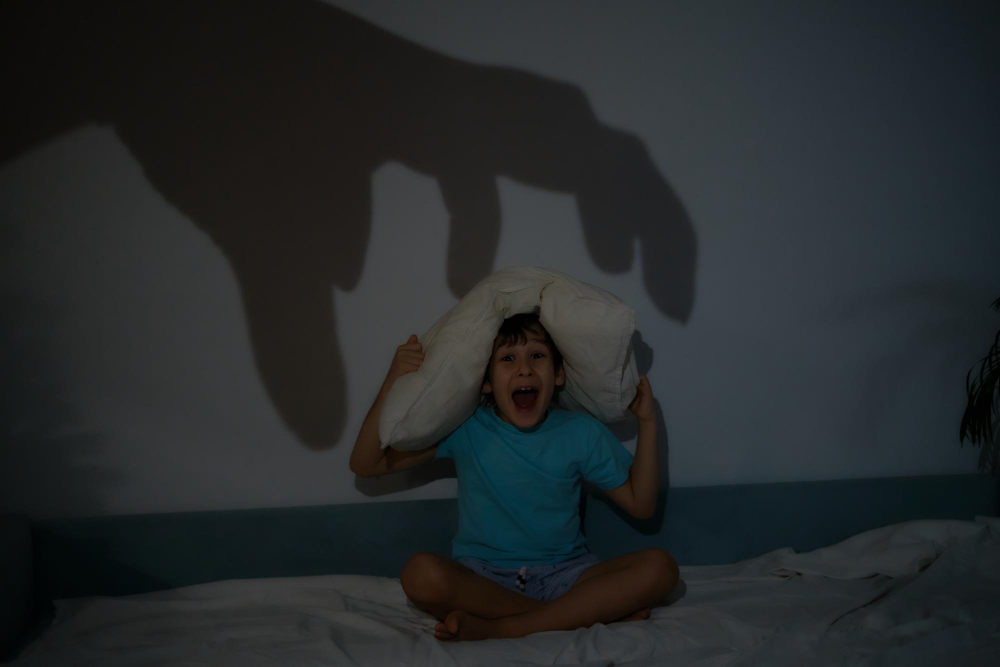
Many parents worry when their child wakes up upset at night. Night terrors and nightmares in children are common sleep disturbances. However, these two childhood sleep disorders are not the same. Understanding the difference between night terrors and nightmares helps parents know how to help a child with night terrors or nightmares. In this blog, we explain what each is, their causes, symptoms, and how to manage them.
What Are Night Terrors?
Night terrors are sudden episodes of fear during sleep. Usually, they happen in the first few hours after a child falls asleep. During a night terror, a child may sit up, scream, or look scared. However, they are still asleep and often do not remember the event in the morning. Night terrors are a type of childhood sleep disorder seen most often in children aged 3 to 8 years.
What Are Nightmares?
Nightmares are scary dreams that wake a child from sleep. Unlike night terrors, nightmares usually happen in the second half of the night. After a nightmare, a child often remembers the dream and may feel scared or upset. Nightmares are a common pediatric sleep issue and can happen at any age, but they are most frequent between ages 3 and 6.
Key Differences Between Night Terrors and Nightmares
Causes and Risk Factors
Several factors can lead to night terrors or nightmares in children. While both are linked to child sleep disturbances, their causes can differ. For example, night terrors often run in families. Nightmares may be triggered by stress or scary experiences.
Symptoms and How to Recognize Each
It is important to know the signs of each sleep problem. This helps parents respond in the right way. Here are common symptoms:
Night Terrors
Nightmares
Diagnosis and When to Seek Help
Most night terrors and nightmares do not need medical tests. However, if your child has frequent episodes, it is wise to talk to a doctor. Sometimes, sleep studies may be needed if there are other symptoms, like sleepwalking or breathing problems. If your child gets hurt during episodes or feels very tired during the day, seek help from a pediatrician or sleep specialist.
Treatment and Management Strategies
There are ways to help children with night terrors or nightmares. Most children outgrow these sleep issues. Still, parents can use simple steps to make nights easier.
Prevention Tips for Parents
Parents can help prevent night terrors and nightmares by following healthy sleep habits. Here are some tips:
In summary, knowing the difference between night terrors and nightmares in children helps parents respond with care. If your child experiences frequent night terrors or nightmares, consult a pediatrician for personalized advice.